
محمد الثبيتي.. ظاهرة شعرية عابرة للحدود – أخبار السعودية
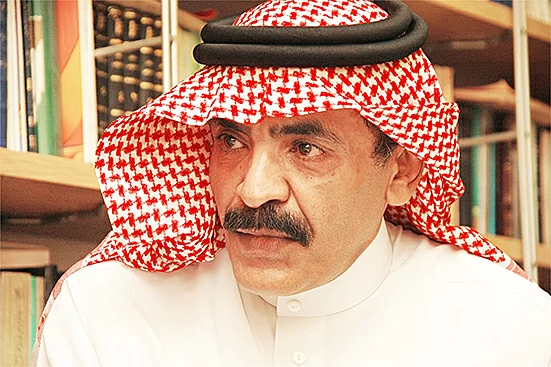
الشاعر الكبير محمد الثبيتي، ملأ الدنيا وشغل النقاد منذ حقبة الثمانينيّات من القرن الماضي، وأحدث ديوانه الشهير (التضاريس) صدىً واسعاً وحواراً متّصلاً في الساحة الأدبية، فعُقدت حوله المؤتمرات وكُتبت عنه المقالات والدراسات وأُلّفتْ فيه الكتب، ذكّرنا بما أحدثه أسلافه من الشعراء الكبار (المتنبي وأبي تمام والمعرّي) من جدل لم ينقطع منذ قرون، وساورني شكٌّ كبير في قدرتي على اختيار جانب من الجوانب يمكنني أن أقارِبه في هذه المقالة، فلم يترك لي النقاد مدخلاً إليه يمكنني من خلاله أن ألِج إلى رحابه وأن أمثُل في حضرته، خصوصاً أني عاصرته، وشهدت ما شجر حوله من جدل، وما دار في ساحته من ضجيج، بل ربما أصابني رذاذٌ من عطر حضوره، فرأيت أن أتصفّح بعضاً مما قيل عنه، سواءّ ما كان منه على منابر إعلاميّة مسموعة أو مقروءة أو ما حُرِّر فيه من مقالات ودراسات وكتب.
وفي (قول على قول) يشير الشاعر المبدع جاسم الصحيح إلى أن الشاعر محمد الثبيتي أصبح أباً للحركة الشعرية، ولم يكُ ممكناً أن يبرز شاعر حديث دون أن يتبلّل بماء الثبيتي، وحين صدر ديوانه الأخير عام 2005 (موقف الرمال موقف الجناس) قال: الآن خرجت من سجن التضاريس؛ أي صعد إلى مرقىً جديد في تجربته الشعرية، فبعد تسعة عشر عاماً تحوّل إلى مُعلِّم صوفي وروحي -كما وصفه جاسم الصحيح- فهو الراهب الكبير الذي يعلّم الأجيال بعده، يخرج من عباءة التضاريس السيمفونية الراقية فيكتب عشرات القصائد: «صاحبي ما الذي غيرك» عشرات القصائد الرائعة: تعارف والبشير وخاتم الماثلين عن النطع والقرين (مقيم على شغف الزوبعة)، فتجربته الشعرية فتنت الوجدان الشعبي، ووصف صوته بأنه صوت الصحراء برنينه الأخّاذ، حيث يتوحّد الجمهور معه -كما يقول الناقد المتميّز محمد العباس- فيتغلغل في مشاعره، متلبّساً روح الصوفيّة في رأي سعد البازعي، ويرى أنه أهم شعراء جيل الثمانينيّات الذين تركوا بصمة عميقة في شعريّة تلك المرحلة.
وفي برنامج (الراحل) الذي قدمه الإعلامي الموهوب محمد الخميسي يستشهد (عبدالله سفر) بمقولة الراحل الكبير سعيد السريحي (رحمه الله): «انتظرنا ألف عام حتى يأتي شاعر في حجم الثبيتي، وعلى أبنائنا أن ينتظروا ألف عام أخرى حتى يأتي شاعر مثله». أما الناقد محمد العباس فيرى أنه الجمال الذي لا يتكرّر، وأنّ الثبيتي كان يقاتل بنصّه في الهجوم المضاد على الحداثة الشعرية، نصّه الذي انتصر في الزمان وانهزم في المكان (لعله يعني أنه أسّس للحداثة في الشعر تاريخيّاً) ولكنه تراجع عشرين عاماً في محيطه فلم يصدر ديوانه الأخير خشية أعداء الحداثة إلا بعد مرور زمن طويل.
فرضت شعريّة الثبيتي وجودها في نهاية المطاف، ويؤكد الشاعر أحمد الملّا أنه لم يردّ على أحد من خصوم الحداثة قط، بل كان شاعراً فقط لا غير، وأن أجواء شعره نابعة من طبيعة الأرض، وأنه لولا صموده شاعراً مبدعاً فحسب لما قامت لشعر الحداثة قائمة، إذ تتّسم قصيدة بالنقاء، مثّل حالة إبداعيّة مختلفة في لغتها كما وصفها العباس. ويرى الشاعر محمد الدميني أن قصيدته قريبة وسهلة في صناعة ماهرة خالية من الكلاسيكية صوراً ومفرداتٍ وأخيلةً. وأشار الشاعر الملا إلى أنه أعاد الاعتبار للغة التي انفردت بها الصحراء مرتبطة بجاهلية الدنيا. ويرى محمد العباس أن التأثير الحقيقي في الثبيتي كان نابعاً من مشاهدته إبداعات شعر الحداثة العربية؛ السياب والبياتي، وأنه تميّز بفرادة التصوير في التراكيب والغوص في التراث ومفردات البيئة الصحراوية، كما تشير الدكتورة (منى المالكي) عصيٌّ على التجاوز. ويتحدّث الكاتب محمد الماجد عن حبه للصحراء، فلم يترك وادياً ولا خيمةً إلّا وعرّج عليها فأعاد للصحراء وهجها وما توحي به من عذريّة وتصوّف، ويقول: كنا نزوره في مكة في سفح جبل النور، وكان منفتحاً على آفاق اجتماعية واسعة وله علاقاته الواسعة مع المقيمين العرب.
ويرى الدكتور عبدالله الغذامي أن ديوان «التضاريس» لم يكن مجرد مجموعة شعريّة، بل كان «البيان الشعري» للحداثة السعودية، وأشار الغذامي إلى أن الثبيتي استنقذ «الصحراء» من دلالتها الجغرافية البدوية الجامدة، وحوّلها إلى رمزٍ كونيٍّ وثقافيٍّ مليء بالحياة، وأسبغ عليها السمة الأسطورية، ويرى أن لغة الثبيتي استطاعت أن تفكّك البنية التقليدية للقصيدة النبطية والكلاسيكية لتعيد إنتاجها بلغة فصيحة حديثة ومتمردة، وهذا التوصيف الدقيق مُجمَعٌ عليه من قبل النقاد، جاء ذلك في كتابه (حكاية الحداثة).
أما الناقد الراحل سعيد السريحي فكان صديقاً مقرّباً من الشاعر الثبيتي، بل هو عرّاب شعره مجايلاً وصديقاً وناقداً، تابع رحلته الإبداعية ونتاجه الشعري قصيدةً قصيدة، وكتب عنه ناقداً ومحللاً، ومما قاله: إن أهمية الثبيتي تكمن في خروجه من «النسق المطمئن» للقصيدة السائدة، واقتحامه مناطق لغوية وإيقاعية غير مألوفة، ويرى أنه استلّ المفردة التراثية من ماضيها، وأعطاها طاقة دلالية جديدة قادرة على التعبير عن قلق الإنسان المعاصر واغترابه (في ندوته الشهيرة حياة في القراءة في معرض جدة الثقافي عام 2017) والغذامي قراءته ثقافيّة، والسريحي مقاربته لغويّة، والبازعي رؤيته فكريّة وفلسفيّة، وعباس مدخله تأويلي ورمزيّ، وهم يجمعون على أن محمد الثبيتي هو المعادل الموضوعي للحداثة الشعرية في المملكة، وهو الشاعر الذي نقل القصيدة المحلية من حدودها الجغرافية إلى فضائها الإنساني.
والناقد علي جعفر العلاق من (العراق) يصف الثبيتي بأنه شاعرٌ رائيٌّ، له القدرة على استنطاق روح الصحراء، وأنه يرى ما لا يراه الآخرون، وأشار إلى موهبته اللغوية التي حوّلت المفردات الجافية إلى ظواهر كونيّة ناطقة تحفل بالدفء والحياة معبّراً عن التراث الثقافي للجزيرة العربية (في مقالته في مجلة نزوى العمانية حول حداثة النص).
والناقد العراقي الدكتور حاتم الصكر، من مواكبي تطوّر الشعر العربي من العمود إلى النثر، واهتم بالحديث عن البعد النفسي والجمالي، وأبرز ما قاله: تجربة الثبيتي الشعرية بعبارة دقيقة وبالغة الدلالة وهي: «شهدٌ على حدّ موس»؛ أي هي جميلة لذيذة كالعسل وحادّة محفوفة بالألم كحد الموس، فهي محفوفة بالقلق الوجودي.
وكتبت عنه في كتابي «التجربة الشعرية الحديثة في المملكة» فيمكن إيجازه في ما يأتي: عدم تأطير الثبيتي جغرافياً، بوصفه ظاهرة شعرية عابرة للحدود المكانية ومؤسسة لتيار حديث، واخترق الخطاب الشعري السائد، وأسس للغة شعرية جديدة، يستشرف آفاق الرؤيا في فضاء شعري، لا يتلبّث عند الحلم المتحرك، بل يغوص في الواقع، ويوظف الأسطورة والرمز.
وأُعدّت الكثير من رسائل الماجستير والدكتوراه في جامعات العالم العربي والدولي والدراسات والبحوث التي ناقشت جوانب متعددة من تجربته الشعرية في (الجزائر، مصر، العراق) نشرت في مجلات علمية محكّمة محلياً ودولية عن الثبيتي باستخدام مناهج عالمية حديثة، مثل؛ المنهج الأسلوبي في ديوانه الأخير «موقف الرمال.. موقف الجناس»، بوصفه ذروة النضج الفني، ومن خلال المنهج السيميائي لدراسة «التناص القرآني» و«التناص الأسطوري» (مثل توظيفه لأسطورة لقمان والنسور)، ليثبتوا أن لغته تمتلك شفرات عالمية قابلة للتفكيك وفق أحدث النظريات النقدية الغربية (مثل نظريات رولان بارت، وجوليا كريستيفا في التناص).
The great poet Muhammad Al-Thubaiti filled the world and occupied critics since the 1980s, and his famous diwan (collection) “Al-Tadarus” created a wide echo and ongoing dialogue in the literary arena. Conferences were held about it, articles and studies were written, and books were authored, reminding us of the debates initiated by his predecessors among great poets (Al-Mutanabbi, Abu Tammam, and Al-Ma’arri) that have not ceased for centuries. I was left with great doubt about my ability to choose an aspect that I could approach in this article, as critics did not leave me an entry point through which I could enter its vastness and stand in its presence, especially since I witnessed him and observed the debates that arose around him and the noise that circulated in his arena. Perhaps I was even touched by the fragrance of his presence, so I thought to browse some of what has been said about him, whether on media platforms, whether audible or written, or what has been documented in articles, studies, and books.
In “A Saying on a Saying,” the creative poet Jassim Al-Sahih points out that poet Muhammad Al-Thubaiti has become a father of the poetic movement, and it would not have been possible for a modern poet to emerge without being touched by Al-Thubaiti’s influence. When his latest diwan was published in 2005 (“The Position of the Sands: The Position of the Pun”), he said: “Now I have emerged from the prison of Al-Tadarus,” meaning he ascended to a new plateau in his poetic experience. After nineteen years, he transformed into a Sufi and spiritual teacher—as described by Jassim Al-Sahih—being the great monk who teaches the generations that follow him. He emerges from the cloak of the sophisticated symphony of Al-Tadarus to write dozens of poems: “My companion, what has changed you?” dozens of wonderful poems: “Ta’aruf,” “The Herald,” and “The Seal of the Presenters about the Nata’ and the Companion (Residing on the Passion of the Whirlwind).” His poetic experience captivated the popular sentiment, and his voice was described as the voice of the desert with its enchanting resonance, where the audience unites with him—as distinguished critic Muhammad Al-Abbas says—immersing in their feelings, embodying the spirit of Sufism in the view of Saad Al-Bazai. He sees him as one of the most important poets of the 1980s who left a deep mark on the poetry of that era.
In the program “The Departed,” presented by the talented media figure Muhammad Al-Khamisi, Abdullah Safar cites the late great poet Saeed Al-Suhaili (may God have mercy on him): “We waited a thousand years for a poet of Al-Thubaiti’s stature to arrive, and our children must wait another thousand years for a poet like him.” As for critic Muhammad Al-Abbas, he sees him as beauty that does not repeat, and that Al-Thubaiti was fighting with his text in a counterattack against poetic modernity, a text that triumphed in time but was defeated in place (perhaps meaning that he historically established modernity in poetry), yet he retreated twenty years in his surroundings and did not publish his latest diwan for fear of the enemies of modernity until a long time had passed.
Ultimately, the poetic essence of Al-Thubaiti imposed its presence. Poet Ahmed Al-Mulla confirms that he never responded to any of the opponents of modernity; he was simply a poet and nothing more, and that the atmosphere of his poetry stems from the nature of the land. Had it not been for his resilience as a creative poet, modern poetry would not have stood firm, as his poems are characterized by purity, representing a different creative state in their language, as described by Al-Abbas. Poet Muhammad Al-Dumaini sees his poetry as close and easy, crafted skillfully, devoid of classical images, vocabulary, and fantasies. Poet Al-Mulla pointed out that he restored the value of the language unique to the desert, linked to the pre-Islamic era. Muhammad Al-Abbas believes that the true influence on Al-Thubaiti stemmed from his observation of the innovations of Arab modern poetry; Al-Sayyab and Al-Bayyati, and that he distinguished himself with unique imagery in structures and delving into heritage and the vocabulary of the desert environment, as Dr. Mona Al-Maliki indicates, making him resistant to transcendence. Writer Muhammad Al-Majid speaks of his love for the desert, as he did not leave a valley or a tent without passing by, restoring the desert’s glow and what it implies of purity and Sufism. He says: “We used to visit him in Mecca at the foot of Mount Al-Noor, and he was open to wide social horizons and had extensive relationships with the Arab residents.”
Dr. Abdullah Al-Ghudami sees that the diwan “Al-Tadarus” was not just a poetry collection, but rather the “poetic statement” of Saudi modernity. Al-Ghudami pointed out that Al-Thubaiti rescued “the desert” from its rigid geographical Bedouin connotation and transformed it into a universal and cultural symbol filled with life, bestowing upon it a mythical quality. He believes that Al-Thubaiti’s language was able to dismantle the traditional structure of the Nabati and classical poem to reproduce it in a modern, eloquent, and rebellious language. This precise description is unanimously agreed upon by critics, as stated in his book “The Tale of Modernity.”
The late critic Saeed Al-Suhaili was a close friend of poet Al-Thubaiti; he was indeed the godfather of his poetry, a contemporary, friend, and critic who followed his creative journey and poetic output poem by poem, writing about him as a critic and analyst. Among what he said is that the importance of Al-Thubaiti lies in his departure from the “comfortable system” of the prevailing poem, and his incursion into unfamiliar linguistic and rhythmic areas. He believes that he extracted the traditional word from its past and gave it a new semantic energy capable of expressing the anxiety and alienation of contemporary man (in his famous seminar “Life in Reading” at the Jeddah Cultural Festival in 2017). Al-Ghudami’s reading is cultural, while Al-Suhaili’s approach is linguistic, Al-Bazai’s vision is intellectual and philosophical, and Al-Abbas’s entry is interpretive and symbolic. They all agree that Muhammad Al-Thubaiti is the objective equivalent of poetic modernity in the Kingdom, and he is the poet who transported local poetry from its geographical boundaries to its human space.
Critic Ali Jaafar Al-Alaq from Iraq describes Al-Thubaiti as a visionary poet, capable of articulating the spirit of the desert, and that he sees what others do not see. He pointed to his linguistic talent that transformed harsh vocabulary into speaking cosmic phenomena filled with warmth and life, expressing the cultural heritage of the Arabian Peninsula (in his article in the Omani magazine “Nizwa” about the modernity of the text).
Iraqi critic Dr. Hatim Al-Sakr, who has witnessed the evolution of Arabic poetry from classical to prose, focused on discussing the psychological and aesthetic dimension. One of the most notable things he said is that Al-Thubaiti’s poetic experience can be precisely and meaningfully described as: “Honey on the edge of a blade”; that is, it is beautiful and delightful like honey, yet sharp and surrounded by pain like the edge of a blade, thus it is surrounded by existential anxiety.
I wrote about him in my book “The Modern Poetic Experience in the Kingdom,” which can be summarized as follows: Al-Thubaiti’s non-geographical framing, as a poetic phenomenon that transcends spatial boundaries and establishes a modern current, penetrating the prevailing poetic discourse, and founding a new poetic language that anticipates the horizons of vision in a poetic space that does not linger at the moving dream but dives into reality, employing myth and symbol.
Many master’s and doctoral theses have been prepared in Arab and international universities, as well as studies and research that discussed various aspects of his poetic experience in Algeria, Egypt, and Iraq, published in peer-reviewed scientific journals locally and internationally about Al-Thubaiti, using modern global methodologies, such as the stylistic approach in his latest diwan “The Position of the Sands… The Position of the Pun,” considered the pinnacle of artistic maturity, and through the semiotic approach to study “Quranic intertextuality” and “mythological intertextuality” (such as his use of the legend of Luqman and the eagles), to prove that his language possesses global codes that can be deconstructed according to the latest Western critical theories (such as the theories of Roland Barthes and Julia Kristeva in intertextuality).
للمزيد من المقالات
اضغط هنا