
يوسف الديني: تبرئةُ كتبة التراث وهْم – أخبار السعودية
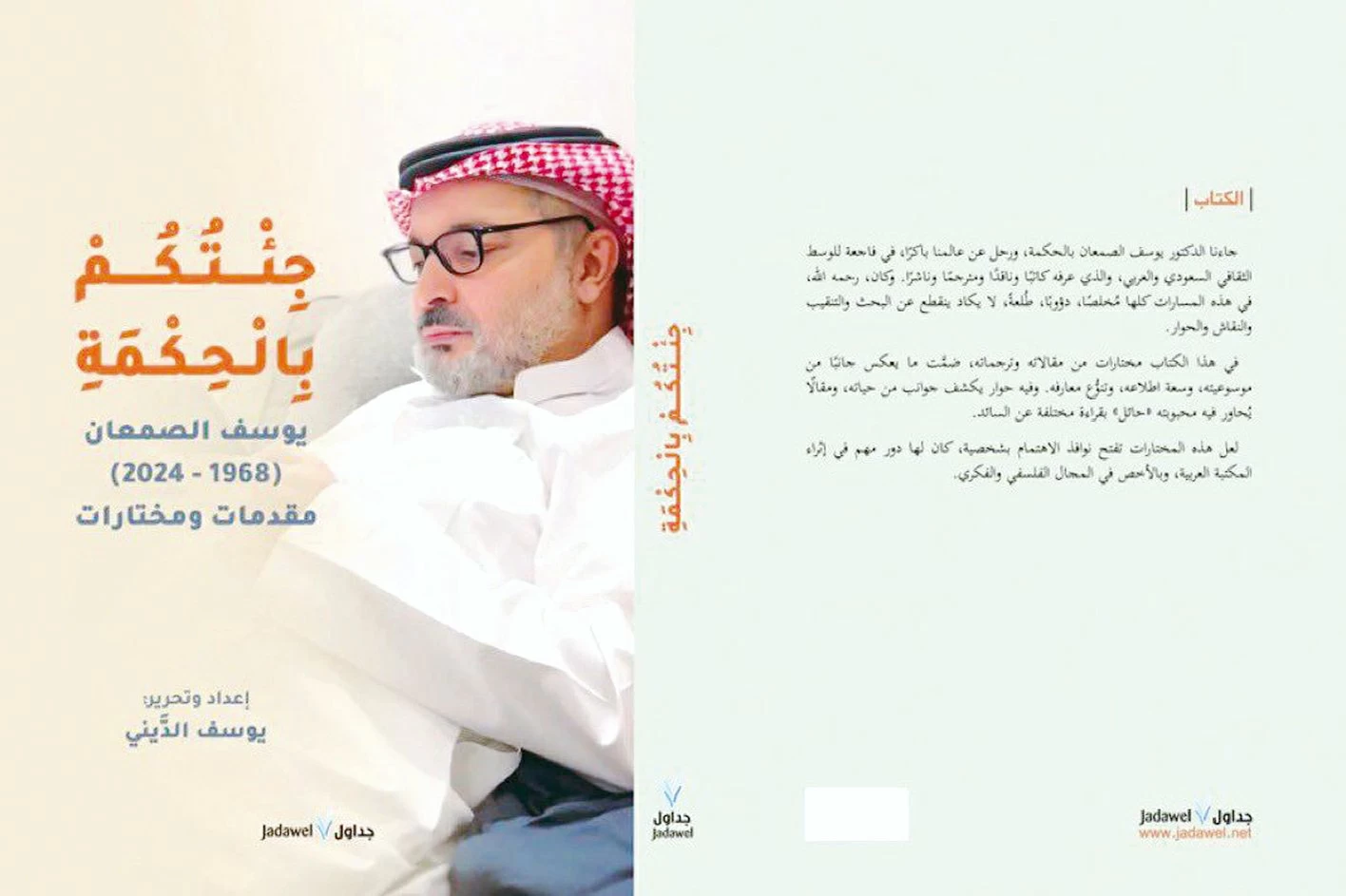
لا ريب أن حواراً مع باحثٍ رصين المنهج، سديد الآلية المعرفية، أمين الكلمة، بقامة الكاتب يوسف الدِّيني، يثير رهبةً من جهة، وطمأنينة من أُخْرى، رهبة طرح سؤال ربما يُزهّد الضيف في مقابلة، بسبب صياغة ركيكة، أو محتوى ساذج، فيما باعث الطمأنينة أن كل جوابٍ، مُسهب، دليل قبول أو رضى عن السؤال، وما أتعس الهواجس التي عبثت بي قبل الردّ من ضيفنا، وما أسعد المشاعر التي تعززت ثقتها في تناوش الأفكار التي أصلها ثابت وفرعها في السماء، ولعل في طيّات الإجابات ما يؤكد صدق مشاعري وكلماتي، فإلى نصّ الحوار:
• أي النصوص التراثية وأنت تقرأها اليوم، تشعر بأن الحقب الزمنية تتفاوت في الشكل لا في المضمون؟
•• النصوص المعالِجة لواقع ما تعيشه البشرية كتعبير عن قناعاتهم وثقافتهم الخاصة، ومن هنا يمكن القول إن أكثر النصوص التي تمنحني هذا الشعور الذي ذكرت هي نصوص الأزمة، المحتوى الذي كتب في لحظات مفصلية في تاريخنا الثقافي والفكري العظيم والمتنوع، ثم تم نزعها عن سياقها التاريخي الخاص بدءاً من نصوص «الفتنة» ومروراً بنصوص التأسيس لمراحل الصراع على الشرعية، ونزاعات السلطة، إذ تحاول الثقافة المتعرضة للتهديد إنتاج نصوص حمائية، ونجد هذه البيئة الخصبة للنصوص المتكررة في كل الأزمنة، في كل سجالات الملل والنحل، والصراعات الكلامية، وأدبيات الأحكام السلطانية، التي تعود مجدداً كنصوص أزمة، وعدة محاولات لإعادة إنتاجها لكن مع تبدل اللغة والعباءة والأقنعة، في حين أن البنية العميقة للثقافة المأزومة في أزمنة الانكسارات تبقى على حالها؛ احتكار الحقيقة، خلق عدو متخيل، انتقال الخلاف من الطبيعي إلى وجودي طارد، ويمكن فقط تأمُّل ما أُنتج في مراحل حرجة من تاريخنا الحديث وطرائق الاستعادة المتشابهة للثقافة المأزومة.
• ماذا يعني كل ما سبق؟ وهل من تجليات ظاهرة؟
•• يعني استثمار جزء من التراث في لحظة ما، لا لتقديمه باعتباره «معرفة» بل أدوات احتراب في شبكة واسعة من عمليات الإقصاء وشرعنة العنف، وإعادة إنتاج سُلطة رمزية للقفز على السلطة الواقعية، ما يتغير فقط الأنماط والأشكال من المفاهيم، المصطلحات، وطرائق الحجاج كما يقول المناطقة، أما المضمون فيشتغل على الحيلة القديمة نفسها؛ دعوى امتلاك الحقيقة، والسماح لمجموعة صغيرة باختزال التجربة الحضارية للنطق باسم حركة ثقافية تنتسب للدين أحياناً، وللأمة أحياناً.. من كل بحسب أيديولوجيته، ولكل بحسب تأزّمه.
• متى تشعر بالريبة من تراثنا؟
•• لا أشعر بالريبة أبداً، لكن بمخاوف من طريقة استغلاله حين يُقرأُ باعتباره كتلة واحدة منزوعة عن سياقها التاريخي، مكتفياً بذاته، متعالياً على واقعه، وكأنه أُنتج خارج التفاعل البشري الطبيعي حين تتجسد الثقافة ضمن شروط موضوعية لإنتاجها، وهنا تتحول بعض صيغ التراث البشرية إلى أصنام معرفية. التراث كله خير إذا عاملناه باعتباره ابن ظرفه وأسئلة زمنه، نتعامل معه كجزء من الإضافة الثرية للصيرورة البشرية في التعامل مع واقعها، لكن حين يُراد له أن يصبح حاكماً بشروط صدوره نفسها، وحلاً خارج سياقه، ويفرض على واقع جديد؛ تبدأ المشكلة.
الريبة تبدأ عندما يتحول التراث الثري والعظيم لأمتنا من شاهد على زمانه إلى سلاح ضد زماننا، وعندما يُستدعى الماضي لاستخدامه وتكراره قبل فهمه، وهنا لا يعود التراث موضوعاً للقراءة، بل أداة تعبئة وتحشيد قسرية ضد منطق الحياة التي تفترض التجدد والاستمرارية.
• ممكن أن يخلق أزمة؟
•• بالطبع، وهو جزء من أزمات الحداثة والأصالة المفتعلة، وهي بالمناسبة ثنائية ظلت منذ البدايات المبكرة لتاريخنا الثقافي تعيد إنتاج نفسها.
• بأي عين تنظر إلى تراثنا العربي؟
•• لا أنظر إلى التراث بعين واحدة، بل بعينين؛ الأولى والأهم الإنصاف والإعجاب بتنوعه وقدرته المدهشة على الإمتاع والإبداع، ربما بسبب عوامل اللغة والانصهار في بيئات وثقافات في كل أرجاء الدنيا تبعاً لتوسع تجربة الحضارة الإسلامية، ثم قدرته على استيعاب تلك الثقافات وإعادة إنتاجها بشكل سلس ومبهر، هناك ثروة هائلة للتراث العربي والإسلامي على مستوى اللغة والفقه وعلم الكلام والحكمة والعمران والمناظرة والتأملات الأخلاقية، أما النظرة بالعين الأخرى، فهي عين المساءلة دون تحيّز، حين ينزلق التراث إلى أداة استبداد ثقافي لتغيير الواقع، أو يقع في فخ الرواسب العصبية وثقافة الإقصاء والتعصب المتبادل. التراث ليس متحفاً مقدساً كما أنه ليس حطاماً بالياً يجب التخلص منه ببساطة، هو خبرة تاريخية ضخمة تستحق القراءة المنصفة والهادئة دون أي دوافع انتقائية أو قيمية.
• ماذا ترى في كيفية التعامل معه؟
•• أعتقد يجب التعامل مع التراث بوصفه أنساقاً لأطياف عدة داخل طبقات وتيارات متنوعة ومتعارضة، تحاول المزاوجة بين العقل والوجدان، والتجربة الروحية وصرامة السؤال الفلسفي، وهذا التنوع جزء أصيل من تكويننا يمكن أن نستعين بما يبقى حياً داخلنا لمنحنا أهمية أساسية «الديمومة الحضارية» والاتصال الهويّاتي لا يُمحى، كما أنه لا يمكن تأليهه، وهنا العدل في احترام التراث دون تقديس ساذج أو قطيعة رعناء.
• هل كتبَةُ تراثنا أبرياء حد التسليم بكل ما كتبوه؟
•• قطعاً لا. وهذه من أوهام القراءة المدرسية التقليدية للتراث. من كتبوا التراث لم يكونوا ملائكة خارج سياق التاريخ، هم بشر من لحم ودم، مبدعون لكن أحياناً تكون لهم انحيازاتهم المفاهيمية والسياسية والمذهبية والاجتماعية، كل العقول العظيمة في تاريخ البشرية وليس تاريخنا فقط هي -بدرجة ما- أسيرة لشروطها التاريخية، فالنصوص الملهمة والتجارب الثقافية المذهلة، لم تولد من فراغ، بل ضمن حقول معرفية تتعاورها رؤى ومصالح ورهانات تتفاعل مع عالمها الخاص، الإشكالية دائماً تبدأ مع الخلط بين القيمة التاريخية لأي تراث والقيمة المطلقة له.
• ماذا عن جنايات التراث على المعاصرة.. واقعية؟ أم مبالغ بها؟ أم لا حقيقة لها؟
•• تعبير «الجناية» هو أيضاً جناية تعبيرية.. في مسائل ثقافية عادة ما ينحاز المثقف في أوج حماسه إلى استعارة تعابير صدامية حربية، وهو جزء من تضخم الأنا الثقافية في تقدير هذا النوع من الصراعات في التأثير على الواقع أو تفسير الإخفاقات، تأثير التعاطي السلبي مع التراث خارج شروطه وحقنه في واقع معقد كواقعنا واضح ولا يمكن إنكاره، بدليل أن كثيراً من الأزمات الفكرية ذات الطابع السياسي والعنفي يتم تبريرها بنصوص تراثية تحاول قياس السابق على اللاحق، لكن أيضاً من الظلم أن يُحمّل التراث وحده كل أسباب فشل المعاصرين.
المشكلة ليست في نصوص الماوردي أو الغزالي أو ابن تيمية، بل في استدعائها من بعض المعاصرين، والتعامل معها باعتبارها أجوبة نهائية ناجزة وجاهزة لا ينقصها سوى الالتزام والتسليم والعمل، وهنا يتحول التراث والذاكرة إلى سلطة معيقة للواقع، لا أحب لغة «إدانة التراث» وهي في أغلبها تصدر عن طارئين عليه يحاولون البحث عن متّهم لتفسير واقعنا الثقافي وصراعاتنا في العالم العربي والإسلامي، بينما نحن من فقدنا الحسّ التاريخي.
• كيف يمكننا تفادي ثوريّة التراث؟
•• لم أفهم «ثورية» التراث هنا، لكن إذا كان المقصود «تثويره» كما عادة ما تحب المقاربات النقدية اليسارية، حال الحديث عن التراث سلباً أو إيجاباً ضمن نطاق مصطلحات وأدوات الديالكتيك الماركسي، فيمكن القول بألا يتحول إلى أداة تعبئة ببساطة، فالتراث لا يثور من تلقاء نفسه وكذلك المشتغلون به، إلا حين يستحيل إلى هوية مأزومة عنيفة لشخصيات تبحث عن خلاص متوهم من خلاله، والحل هنا ليس في إدانته ووصفه بالتثوير، بل بتحريره من الاستخدام التعبوي وإعادته إلى مجاله الطبيعي؛ مجال الفهم والقراءة وليس التحشيد والتفخيخ، من يحولون التراث إلى أسلحة آنية، معزولون عن الواقع وردّ فعل لنهاية عصر القوميات الكبرى.
• لماذا يعود التطرف؟ وما مغذياته التي تحفزه للعودة خصوصاً في عالمنا الإسلامي؟
•• التطرف لا يعود، فهو كامن وباقٍ، فقط يتم إنتاجه بشروط جديدة متى ما توفرت له ثلاثة أركان أساسية إذا أردنا التبسيط لظاهرة معقدة؛ فكرة مغلقة متخيلة، وواقع سياسي أو اجتماعي مأزوم، ثم فراغ مؤسساتي يُضعِف سلطة الدولة، لذلك التطرف هو عَرَض لمرض أعمق ولا يمكن اعتباره حدثاً طارئاً، فهو موجود على قارعة الطريق البشري نحو البحث عن الأمان، في التجربة الإسلامية يتخذ شروطاً إضافية من أهمها القراءة الانتقائية للتراث، وضعف التربية النقدية، وهشاشة المجال العام، وأيضاً الجنوح لتحويل المسألة الدينية إلى أيديولوجيا صدامية، وهنا يجب التمييز بين «الدين» وبين «المقولة الدينية».
• عمّ يعبّر العنف؟
•• غالباً ما يعبّر العنف عن فشل حياة مدنية في كنف دولة مؤسسات قوية، وهذه المعادلة نفهمها اليوم على شكل معادلة؛ كلما قويت مؤسسات الدولة -ومن ضمنها المؤسسة الأمنية- تضاءلت فرص تحول التطرف الكامن إلى واقع، لأن التطرف «العَرَض» يتغذى على جذوره المرضية وهي في غالبها شعورية تنحو إلى امتلاك الحقيقة، وتصور خاص للعالم، والحل على شكل خلاصي، ومن هنا يغدو تفسير التطرف بالنصوص أو التراث ساذجاً، كما أن محاولات تفسير العنف بالأسلمة قصور، لأن العنف كما رأينا في تجليات عنفية غير دينية هو فكرة مسيطرة تبحث عن لغة عليا ربما تكون دينية أو قومية أو ماركسية، فالمسألة هي أزمة معنى أكثر من مجرد خطاب ديني منفلت أو متشدد (فقط) التفقيط معضلة في تفسير الظواهر المعقدة.
• لماذا لم تتم تنقية التراث وإعادة طرحه بصيغ سلميّة؟
•• لأن «تنقية التراث» ليست عملية فنية جراحية لو سلمنا بأن ثمة عملية «تنقية»، هي عمليات طويلة وتاريخية ضمن تفاعلات التأويل والشرعية والسلطة مع الفاعلين الأساسيين ضمن حقول الدين والثقافة والاجتماع، وجزء من بقاء هيمنة التراث بالمعنى السلبي كسلطة ثقافية تتغذى على الالتباس؛ لأنه يمنحها القدرة على التعبئة والاحتكار للحقيقة، وكثير من المشاريع النقدية والقراءة للتراث «التنقية» كما وصفتها تقع في خطأ التبسيط المخل، أو العداء الفج للتراث، ولذلك يفقد القدرة على الإقناع أو التأثير.
• ماذا نحتاج للتعامل مع التراث؟
•• نحن لسنا بحاجة إلى تطهير أو تنقية، وإنما تفكير بأدوات تحليلية لمعرفة ما هو تاريخي وأخلاقي واجتهادي، وكيف وُلد كل منها في سياقه الخاص وفترات القوة والنزاعات والأزمة، ودون هذا الفرز الهادئ الموضوعي، سنظل ندور في فلك التقديس الساذج والقطيعة الأكثر سذاجة، ومع كل التقدير لمشاريع نقد التراث وقراءتها التي اطلعت على كثير منها في المشرق والمغرب وفي المدارس الغربية «الاستشراق» غالبها ينتمي إلى المحاولات الفردية المشكورة، بينما تراث بهذه الضخامة بحاجة إلى أعمال مؤسسية تكون نتيجة شجاعة معرفية وفضاء عام إيجابي يسمح بالنقاش.
• هل انفرط عقد الثقافة ولم تعد هناك رابطة تتصدى لما يفِد ويرد من ثقافات استهلاكية؟
•• لا يمكن الإجابة بنعم جازمة وإنما خجولة، عطفاً على حالة السيولة الجارفة للثقافة الاستهلاكية التي تدخل المجال العام بكل أقنيته بشكل غير قابل للفلترة، نعيش زمن التدفق لا الاختيار، والاستهلاك على حساب التمثل، ويمكن القول إن الثقافة صارت اليوم موضات اقتناء وتشيّؤ أكثر من حالة ذهنية وسلوك معيشي، ولذلك هذا المحتوى -دون أن نقع في فخل التهويل- من شأنه إحداث تغييرات هائلة للمجتمعات الهشة ثقافياً وهويّاتياً، والمعضلة دائماً ليست في كثرة الوافد والدخيل وإنما في ضعف المناعة الثقافة الذاتية.
• ألم يجنِ بعض المنظّرين الغربيين على الإنسانية وهم يسوغون السياسات العنجهية؟ فوكوياما نموذجاً.
•• نعم بعض -وللأسف في فترات ما كثير- من المنظّرين خصوصاً عن عالمنا العربي والإسلامي لم يكونوا مجرد شارحين أمناء للعالم على طريقة الفلاسفة في رواق الحكمة، بل شاركوا في صناعة أوهام الخطابات السياسية المتطرفة والمقاربات الأيديولوجية نحو المشرق ودول العالم الثالث، وأسهموا في صناعة الأوهام، ودون أن نقع في إدانة تعميمية «سعيدية» (نسبة إلى إدوارد سعيد)، ويمكن القول إن فوكوياما في لحظة «نهاية التاريخ» عبّر عن نشوة حضارية محمومة رأت في النموذج الليبرالي الغربي أفقاً نهائياً مغلقاً للتاريخ البشري يشبه الخطابات القيامية اليقينية، والمشكلة هنا ليست في تفاصيل أطروحته الفلسفية التي كُتبت بأناقة بل بما أضمرته من استعلاء ثقافي وأخلاقي وسياسي، والإنصاف يقتضي ألا نحاكم الرجل وحده. كانت تلك لحظة نشوة غربية مكتملة، شاركت فيها الجامعات، ومراكز الدراسات، والإعلام، والآلة السياسية الغربية ما بعد الانتصار الليبرالي في الحرب الباردة التي نظرت إلى العالم من زاوية واحدة، حتى جاءت لحظة الواقعية بما حملته من حروب وأزمات وانكسارات وصعود للتيارات المتشددة من الإسلام السياسي، إلى اليمين المتطرف، إلى التوحش الصهيوني لحكومة نتنياهو، وما أنتجته من عدمية عالمية تنذرنا بأننا لسنا سوى أمام تاريخ متجدد مفتوح لا يمكن ادعاء النهايات فيه.. المعضلة في الأطروحات التي تحاول التلبّس بدثار الكونية، وتمنح رمزيات للهيمنة وإنْ بلغة ناعمة فكرية.
• أين تكمن إشكالية العالم الإسلامي؟
•• إشكالية «العالم الإسلامي» تبدأ -في نظري- من المفهوم وليس في الواقع فهذا التعبير منذ ذيوعه لا يعبر عن معطى طبيعي أو تاريخي موصوف بالاتصال والملامح الواضحة، بل هو بناء حديث حجاجي ومدرسي إذا أردنا أن نبتعد عن بعض الظن الآثم، تشكَّل ضمن سياقات سياسية وكولونيالية، أخذت طريقاً طويلاً لتتطور، ثم جرى لاحقاً التعامل معه، عقب أن تم إنتاج العديد من النظريات والأطروحات على أنه واقع وحقيقة ثابتة، وهو ببساطة يخلط بين الأمة الجماعة الإيمانية أو اللغوية أو القومية، وبين هذا الجزء من العالم بوصفه وحدة جيوسياسية وثقافية صلبة توصف بالعالم الإسلامي.
حين نبدأ من مفهوم متخيل، ننتج أسئلة مشوهة وحلولاً مشوهة. لذلك أرى أن إشكالية «العالم الإسلامي» ليست دينية وحدها، ولا سياسية وحدها، بل في تحويل التنوع التاريخي الهائل إلى جوهر واحد، منزوع من سياقاته. المشكلة ليست في الإسلام، بل في تحويله إلى كتلة مغلقة تُقرأ بها كل الصراعات. وهنا يبدأ الوهم، وتبدأ معه معظم الأخطاء التي نراها اليوم.
• من يملك مفاتيح الحلول اليوم؟
•• لا أحد يملك المفتاح فضلاً عن المفاتيح للحل، فهي ليست عند المثقف أو الفقيه أو المختص السياسي أو الاقتصادي، لكن مفاتيح الحل في مقاربة؛ مركبة يمكن أن تقودها الدولة التي تحتضن هؤلاء في مؤسساتها التعليم، والقانون، والثقافة، والتنمية، وهنا إذا استعرنا «إن الله يزع بالسلطان» من تراثنا، وهي مقولة شديدة الأهمية يمكن القول إن الإرادة السياسية مفتاح أساسي للبناء، ولذلك المقاربة التي أميل لها؛ دولة قوية وعقلانية تستثمر في مواطنيها وتقوّي مؤسسات تعليمها التي تطور عقولاً نقدية وعملية متحررة من سطوة الخطابات الأيديولوجية وغير الوطنية، يمكن أن تكون بداية الحل الذي يتطور إلى واقع مع الوقت، ولنا في رؤية 2030 مثال واضح ومهم وواقعي رغم كل التحديات.
• لماذا عالم العرب فقير بحثياً؟ أعني البحوث والدراسات المعنيّة بواقعه.
•• الوصف بالفقر ربما يكون مجحفاً، إلا إذا وصفنا به المؤسسات وخصوصاً المتخصصة والوقفية التي تتفرغ لإنتاج دراسات وأبحاث مستمدة من الواقع مبنية على البيانات والإحصاءات، ومتسلحة بمتخصصين يملكون الأدوات النظرية والمعرفة بالواقع المحلي، بعيداً عن فذلكة المؤسسات الاستشارية الربحية، رغم أن لدينا حراكاً جيداً على مستوى إنتاج المعرفة والبحوث والدراسات، وما تقذفه دور النشر يومياً من عناوين، إلا أننا نفتقد مخرجات تستند إلى تقاليد منهجية صارمة، وتمويل مستقل، وبيئات مؤسسية ترى في البحث العلمي إدارة معرفة وإنتاجاً حضارياً من شأنه خلق واقع أفضل.
• هل أنت راضٍ عن أساليب وآليات تحقيق التراث المعاصرة؟
•• هناك جهود مشكورة بلا شك، وللأمانة التعامل مع التراث تحقيقاً وتعليقاً نحن فيه منذ عقود نحوز المقدمة، لكنه ما زال محصوراً في المدرسة التقليدية التي تُعنى بالتكنيك من المقابلة والنسخ، ثم ضبط النص، والتخريج والإحالة والتعليق، لكن التعامل مع التراث على مستوى التحقيق أبعد من ذلك، خصوصاً في الدراسات التمهيدية للنص التي يجب ألا تطول بتكرار ترجمة صاحب النص والهوامش الثقيلة والمكررة، وإنما في مقدمة ودراسة تقرأ النص ضمن شروط إنتاجه، وتكتشف بناءه المفاهيمي، وتحيزاته، وكيف تم تلقّيه تاريخياً، تحقيق النص بمعزل عن الأسئلة، يعني أننا نعيد نشر التراث دون إسهام في تقديم العون لفهمه.
• بماذا يمكننا المحافظة على الثقافة الصلبة المعززة للهويّة في زمن تسييل الثقافات والقيم؟
•• ثلاثة محددات؛ هوية وطنية راسخة، وتعليم جاد، وثقافة حيّة.. فالهوية التي تخاف من كل شيء ليست هوية صلبة، بل هوية قلقة، والثقافة التي لا تنتج فناً ومعرفة وسرديات لمتلقّي اليوم ستكون مجرد تكرار نوستالجي للماضي، والثقافة الحية هي الثقافة الجاذبة بقدرتها على التكيف والتجدد دون أن تفقد تماسكها وجذورها الصلبة.
There is no doubt that a dialogue with a researcher of sound methodology, correct cognitive mechanisms, and the integrity of words, like the writer Youssef Al-Daini, evokes both awe on one hand and reassurance on the other. The awe comes from the fear of posing a question that might discourage the guest from participating in the interview due to a clumsy formulation or naive content. The source of reassurance is that every answer, detailed and elaborate, is a sign of acceptance or satisfaction with the question. How unfortunate were the anxieties that troubled me before our guest’s response, and how joyful were the feelings that strengthened my confidence in the exchange of ideas that have a firm root and branches in the sky. Perhaps within the folds of the answers lies confirmation of the sincerity of my feelings and words. So, here is the text of the dialogue:
• Which heritage texts, as you read them today, make you feel that the time periods vary in form but not in content?
•• The texts that address the reality of what humanity is experiencing as an expression of their convictions and their own culture. From this, it can be said that the texts that give me this feeling are crisis texts, the content that was written in pivotal moments in our rich and diverse cultural and intellectual history, which have since been stripped of their specific historical context, starting from the texts of “fitna” (sedition) and passing through the foundational texts of the stages of the struggle for legitimacy and power disputes. Here, culture, threatened by crisis, attempts to produce protective texts. We find this fertile environment for recurring texts in all times, in all debates of sects and schools, verbal conflicts, and the literature of sovereign decrees, which return again as crisis texts, with several attempts to reproduce them but with changes in language, attire, and masks. Meanwhile, the deep structure of the troubled culture in times of breakdown remains unchanged; the monopoly of truth, the creation of an imagined enemy, the transition of disagreement from natural to existential and repulsive. One can only reflect on what was produced in critical stages of our modern history and the similar methods of recovering the troubled culture.
• What does all of the above mean? Are there manifestations of this phenomenon?
•• It means investing part of the heritage at a certain moment, not to present it as “knowledge” but as tools of conflict in a wide network of exclusion and legitimization of violence, and the reproduction of symbolic authority to leap over real authority. What changes are only the patterns and forms of concepts, terms, and methods of argumentation, as logicians say, while the content operates on the same old trick; the claim of possessing the truth, allowing a small group to reduce the civilizational experience to speak on behalf of a cultural movement that sometimes belongs to religion and sometimes to the nation… each according to their ideology, and each according to their crisis.
• When do you feel suspicious of our heritage?
•• I never feel suspicious, but I do have fears about the way it is exploited when read as a single block, stripped of its historical context, self-sufficient, and transcending its reality, as if it were produced outside the natural human interaction when culture is embodied within the objective conditions of its production. Here, some forms of human heritage turn into cognitive idols. The heritage is all good if we treat it as the child of its circumstances and the questions of its time, engaging with it as part of the rich addition to human evolution in dealing with its reality. However, when it is intended to become a ruler under the same conditions of its issuance, and a solution outside its context, imposed on a new reality, the problem begins.
Suspicion begins when the rich and great heritage of our nation transforms from a witness to its time into a weapon against our time, and when the past is summoned to be used and repeated before being understood. Here, heritage ceases to be a subject of reading, but rather becomes a coercive tool for mobilization against the logic of life that assumes renewal and continuity.
• Could it create a crisis?
•• Of course, and it is part of the crises of modernity and the fabricated authenticity, which, by the way, is a duality that has been reproducing itself since the early beginnings of our cultural history.
• With what eye do you view our Arab heritage?
•• I do not look at heritage with one eye, but with two; the first and most important is fairness and admiration for its diversity and its astonishing ability to entertain and create, perhaps due to factors of language and integration into environments and cultures all over the world, following the expansion of the Islamic civilization experience. Then, its ability to absorb those cultures and reproduce them in a smooth and impressive manner. There is a huge wealth in the Arab and Islamic heritage in terms of language, jurisprudence, theology, wisdom, urbanism, debate, and ethical reflections. As for the view with the other eye, it is the eye of questioning without bias, when heritage slips into a tool of cultural tyranny to change reality, or falls into the trap of tribal residues and a culture of exclusion and mutual intolerance. Heritage is neither a sacred museum nor a worn-out wreck that should simply be discarded; it is a vast historical experience that deserves fair and calm reading without any selective or evaluative motives.
• What do you see in how to deal with it?
•• I believe we should deal with heritage as a system of several spectra within diverse and conflicting layers and currents, attempting to reconcile reason and emotion, spiritual experience and the rigor of philosophical questioning. This diversity is an integral part of our formation, and we can draw on what remains alive within us to grant us the essential importance of “civilizational continuity” and an identity connection that is not erased, just as it cannot be deified. Here lies the justice in respecting heritage without naive sanctification or reckless rupture.
• Are the writers of our heritage innocent to the point of accepting everything they wrote?
•• Certainly not. This is one of the illusions of traditional school readings of heritage. Those who wrote heritage were not angels outside the context of history; they are human beings of flesh and blood, creative but sometimes have their conceptual, political, sectarian, and social biases. All great minds in the history of humanity, not just our history, are – to some extent – prisoners of their historical conditions. The inspiring texts and amazing cultural experiences did not emerge from a vacuum, but within fields of knowledge that are influenced by visions, interests, and stakes interacting with their own world. The problem always begins with the confusion between the historical value of any heritage and its absolute value.
• What about the crimes of heritage against modernity… are they real? Exaggerated? Or is there no truth to them?
•• The term “crime” is also an expressive crime… in cultural matters, intellectuals often, in the height of their enthusiasm, lean towards borrowing combative warlike expressions. This is part of the inflation of the cultural ego in assessing this type of conflict’s impact on reality or interpreting failures. The impact of negative engagement with heritage outside its conditions and injecting it into a complex reality like ours is clear and undeniable, evidenced by the fact that many intellectual crises of a political and violent nature are justified by heritage texts that attempt to measure the past against the present. However, it is also unfair to hold heritage solely responsible for all the failures of contemporaries.
The problem is not in the texts of Al-Mawardi, Al-Ghazali, or Ibn Taymiyyah, but in their invocation by some contemporaries, treating them as final and ready answers that only lack commitment, acceptance, and action. Here, heritage and memory turn into an obstructive authority against reality. I do not like the language of “condemning heritage,” which mostly comes from outsiders who seek to find a culprit to explain our cultural reality and conflicts in the Arab and Islamic world, while we are the ones who have lost the historical sense.
• How can we avoid the revolutionary nature of heritage?
•• I did not understand the “revolutionary” nature of heritage here, but if what is meant is “revolutionizing” it as critical leftist approaches often prefer when discussing heritage negatively or positively within the scope of Marxist dialectical terms and tools, it can be said that it should not simply become a tool of mobilization. Heritage does not revolutionize by itself, nor do those who work with it, except when it turns into a violent troubled identity for characters seeking an illusory salvation through it. The solution here is not to condemn it and label it as revolutionary but to liberate it from mobilization use and return it to its natural domain; the domain of understanding and reading, not mobilization and booby-trapping. Those who turn heritage into immediate weapons are isolated from reality and are a reaction to the end of the era of great nationalities.
• Why does extremism return? What are the nutrients that stimulate its return, especially in our Islamic world?
•• Extremism does not return; it is latent and remains, only produced under new conditions whenever three essential pillars are available if we want to simplify a complex phenomenon: a closed imagined idea, a troubled political or social reality, and an institutional vacuum that weakens the authority of the state. Therefore, extremism is a symptom of a deeper illness and cannot be considered a mere event; it exists on the human road toward seeking security. In the Islamic experience, it takes on additional conditions, the most important of which are selective reading of heritage, weak critical education, fragility of the public sphere, and also the tendency to transform the religious issue into a combative ideology. Here, we must distinguish between “religion” and “the religious statement.”
• What does violence express?
•• Violence often expresses the failure of civil life under a strong institutional state. We understand this equation today as follows: the stronger the state institutions – including the security institution – the smaller the chances of latent extremism turning into reality. This is because extremism as a “symptom” feeds on its pathological roots, which are mostly emotional, leaning toward possessing the truth and a specific vision of the world, with a solution in a salvific form. Hence, interpreting extremism through texts or heritage is naive, just as attempts to interpret violence through Islamization are insufficient. Violence, as we have seen in non-religious violent manifestations, is a dominant idea seeking a higher language that may be religious, nationalistic, or Marxist. The issue is more a crisis of meaning than merely an unrestrained or extreme religious discourse (only). The simplification of complex phenomena is a dilemma in interpreting them.
• Why has heritage not been purified and re-presented in peaceful forms?
•• Because “purifying heritage” is not a surgical artistic process if we assume that there is a “purification” process. It is a long and historical process within the interactions of interpretation, legitimacy, and authority with the main actors within the fields of religion, culture, and society. Part of the persistence of the negative hegemony of heritage as a cultural authority that feeds on ambiguity is that it gives it the ability to mobilize and monopolize the truth. Many critical projects and readings of heritage “purification,” as you described it, fall into the error of gross simplification or blatant hostility to heritage, and thus lose the ability to persuade or influence.
• What do we need to deal with heritage?
•• We do not need purification or cleansing, but rather analytical thinking tools to understand what is historical, ethical, and interpretative, and how each was born in its specific context and periods of strength, conflict, and crisis. Without this calm and objective sorting, we will continue to revolve in the orbit of naive sanctification and the most naive rupture. With all due respect to the critical projects of heritage and the readings I have seen many of in the East and West and in Western schools of “Orientalism,” most of them belong to commendable individual attempts. However, a heritage of such magnitude needs institutional works resulting from courageous knowledge and a positive public space that allows for discussion.
• Has the bond of culture unraveled, and is there no longer a link that confronts the incoming and outgoing consumer cultures?
•• One cannot answer with a definitive yes, but rather a shy one, given the overwhelming liquidity of consumer culture that enters the public sphere through all its channels in a non-filterable manner. We live in a time of flow, not selection, and consumption at the expense of representation. It can be said that culture has become more about the trends of acquisition and commodification than a mental state and a way of life. Therefore, this content – without falling into the trap of exaggeration – is likely to cause enormous changes in culturally and identitarily fragile societies. The dilemma is always not in the abundance of the incoming and foreign but in the weakness of self-cultural immunity.
• Have some Western theorists wronged humanity as they justify arrogant policies? Fukuyama is an example.
•• Yes, some – and unfortunately, at times many – theorists, especially regarding our Arab and Islamic world, were not merely honest explainers of the world in the manner of philosophers in the hall of wisdom. They participated in creating the illusions of extreme political discourses and ideological approaches towards the East and the Third World, contributing to the fabrication of illusions. Without falling into a generalizing “Saidian” condemnation (referring to Edward Said), it can be said that Fukuyama, at the moment of the “end of history,” expressed a feverish civilizational euphoria that saw in the Western liberal model a closed final horizon for human history resembling certain eschatological discourses. The problem here is not in the details of his philosophical thesis, which was written elegantly, but in what it concealed of cultural, moral, and political arrogance. Justice requires that we do not judge the man alone. That was a complete moment of Western euphoria, in which universities, research centers, media, and the Western political machine after the liberal victory in the Cold War looked at the world from a single perspective until the moment of realism came, bringing with it wars, crises, breakdowns, and the rise of extremist currents from political Islam to the far right to the Zionist brutality of Netanyahu’s government, producing a global nihilism warning us that we are only facing a renewed open history where claiming endings is impossible. The dilemma lies in the propositions that try to don the cloak of universality, granting symbols of hegemony even if in a soft intellectual language.
• Where does the problem of the Islamic world lie?
•• The problem of the “Islamic world” begins – in my view – from the concept, not from reality. This expression, since its proliferation, does not express a natural or historical fact characterized by connection and clear features, but rather a modern argumentative and educational construction, if we want to avoid some sinful assumptions, formed within political and colonial contexts. It took a long path to develop, and later it was dealt with after many theories and propositions were produced, treating it as a fixed reality and truth. It simply confuses between the community of faith or language or nationality and this part of the world as a solid geopolitical and cultural unit described as the Islamic world.
When we start from an imagined concept, we produce distorted questions and distorted solutions. Therefore, I see that the problem of the “Islamic world” is not solely religious, nor solely political, but in transforming the immense historical diversity into a single essence, stripped of its contexts. The problem is not in Islam, but in turning it into a closed block through which all conflicts are read. Here begins the illusion, along with most of the mistakes we see today.
• Who holds the keys to solutions today?
•• No one holds the key, let alone the keys to the solution. They are not with the intellectual, the jurist, or the political or economic specialist. However, the keys to the solution lie in a complex approach that can be led by the state, which embraces these within its institutions of education, law, culture, and development. Here, if we borrow “Indeed, God restrains with the sultan” from our heritage, which is a very important saying, we can say that political will is a key element for construction. Therefore, the approach I lean towards is a strong and rational state that invests in its citizens and strengthens its educational institutions that develop critical and practical minds free from the dominance of ideological and unpatriotic discourses. This can be the beginning of a solution that evolves into reality over time, and we have in Vision 2030 a clear, important, and realistic example despite all the challenges.
• Why is the Arab world poor in research? I mean research and studies concerned with its reality.
•• Describing it as poor may be unjust, unless we describe it in relation to institutions, especially specialized and endowment institutions that dedicate themselves to producing studies and research derived from reality based on data and statistics, armed with specialists who possess theoretical tools and knowledge of the local reality, far from the embellishments of profit-driven consulting firms. Although we have a good movement in terms of knowledge production and research and studies, as evidenced by the daily output of publishing houses, we still lack outputs that rely on strict methodological traditions, independent funding, and institutional environments that view scientific research as knowledge management and a civilizational production that can create a better reality.
• Are you satisfied with the contemporary methods and mechanisms of heritage realization?
•• There are undoubtedly commendable efforts, and to be fair, dealing with heritage in terms of realization and commentary has been ongoing for decades, and we have the lead in this. However, it is still confined to the traditional school that focuses on the technique of interviewing, copying, then text verification, referencing, and commenting. But dealing with heritage at the level of realization goes beyond that, especially in the preliminary studies of the text that should not be prolonged by repeating the author’s translation and heavy and repetitive footnotes, but rather in an introduction and study that read the text within the conditions of its production, discovering its conceptual structure, biases, and how it was historically received. Realizing the text in isolation from the questions means that we are republishing heritage without contributing to aiding its understanding.
• How can we preserve the solid culture that enhances identity in a time of cultural and value commodification?
•• Three determinants: a solid national identity, serious education, and a vibrant culture. The identity that fears everything is not a solid identity, but a worried identity. The culture that does not produce art, knowledge, and narratives for today’s audience will merely be a nostalgic repetition of the past. A living culture is the culture that attracts with its ability to adapt and renew without losing its cohesion and solid roots.
للمزيد من المقالات
اضغط هنا