
مصحف نادر يعود للقرن الثالث عشر الهجري في متحف القرآن الكريم – أخبار السعودية
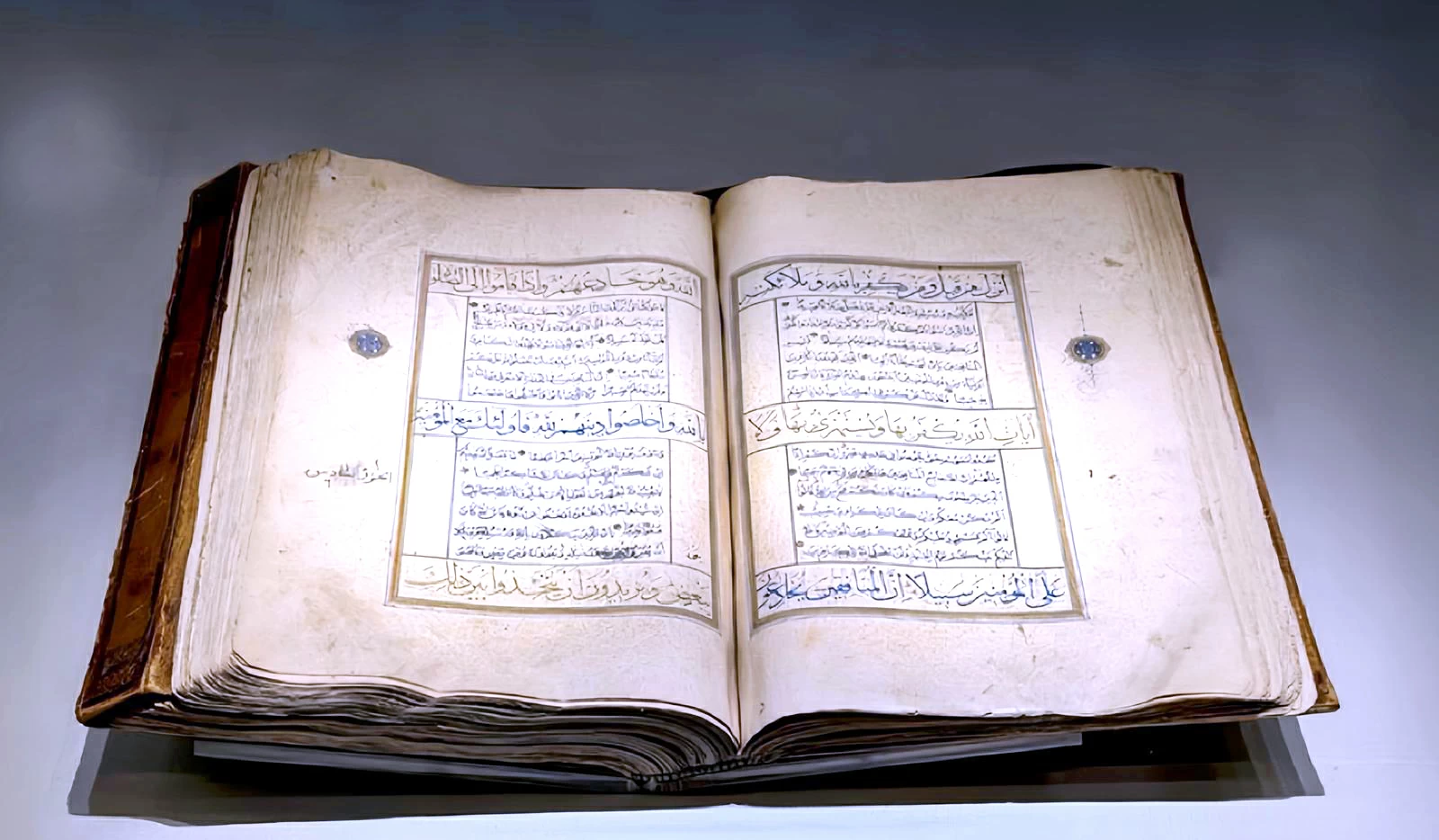
عرض متحف القرآن الكريم أحد مقتنياته النادرة، مصحف شريف يعود إلى القرن الثالث عشر الهجري (التاسع عشر الميلادي)، في نموذج يجسد عناية المسلمين عبر العصور بالأوقاف على المصاحف، واهتمامهم البالغ بإتقانها فنياً وزخرفياً.
ويتميز المصحف بكتابته بمداد أسود مع استخدام عدة ألوان، وضبطه الكامل بالشكل والحركات، فيما جاءت الفواصل بين الآيات على هيئة دوائر مذهبة، وأُطّر النص داخل صفحاته بإطارات متعددة الألوان، إلى جانب اشتماله على علامات الأجزاء والأحزاب التي تسهل التلاوة والتنقل بين مواضعه.
ويزدان المصحف بزخارف وتذهيبات ورسوم نباتية دقيقة في بدايته ومنتصفه ونهايته، تعكس مستوى متقدماً من الفنون الإسلامية؛ إذ تظهر الأسطر في صفحاته الأولى ضمن سحب مذهبة، مما يبرز البُعد الجمالي والحضاري لفنون الكتابة الإسلامية في تلك الحقبة.
وأشارت المعلومات المصاحبة للمخطوط إلى أنه خضع لعمليات ترميم سابقة حافظت على مكوناته الفنية، فيما يحمل في آخره قيد وقف على أحد الجوامع، إلا أن اسم الجامع قد طُمِس مع مرور الزمن.
The Museum of the Holy Quran showcased one of its rare possessions, a noble Quran dating back to the 13th century Hijri (19th century AD), in a model that embodies the care of Muslims throughout the ages for endowments on the Qurans, and their profound interest in perfecting it artistically and decoratively.
The Quran is distinguished by its writing in black ink with the use of several colors, and it is fully vowelized with diacritics. The separations between the verses are in the form of gilded circles, and the text is framed within its pages with multi-colored borders, in addition to including markers for the parts and sections that facilitate recitation and navigation between its locations.
The Quran is adorned with decorations, gilding, and intricate floral designs at its beginning, middle, and end, reflecting an advanced level of Islamic arts; the lines in its first pages appear within gilded clouds, highlighting the aesthetic and civilizational dimension of Islamic writing arts in that era.
The accompanying information about the manuscript indicated that it underwent previous restoration processes that preserved its artistic components, while it bears at its end a waqf inscription on one of the mosques, although the name of the mosque has been obscured over time.
للمزيد من المقالات
اضغط هنا